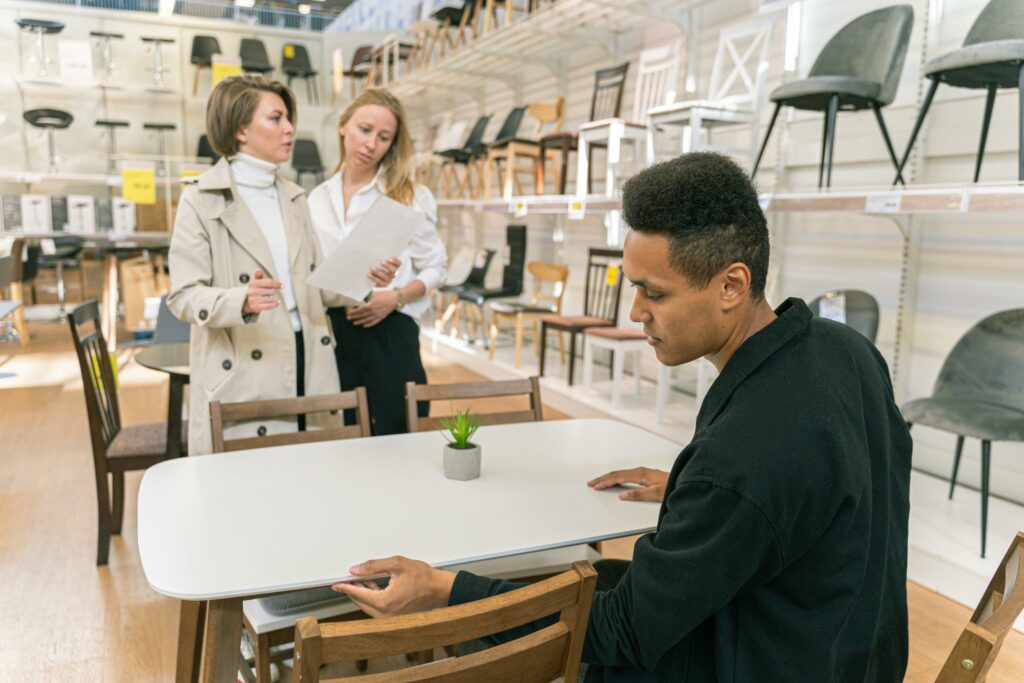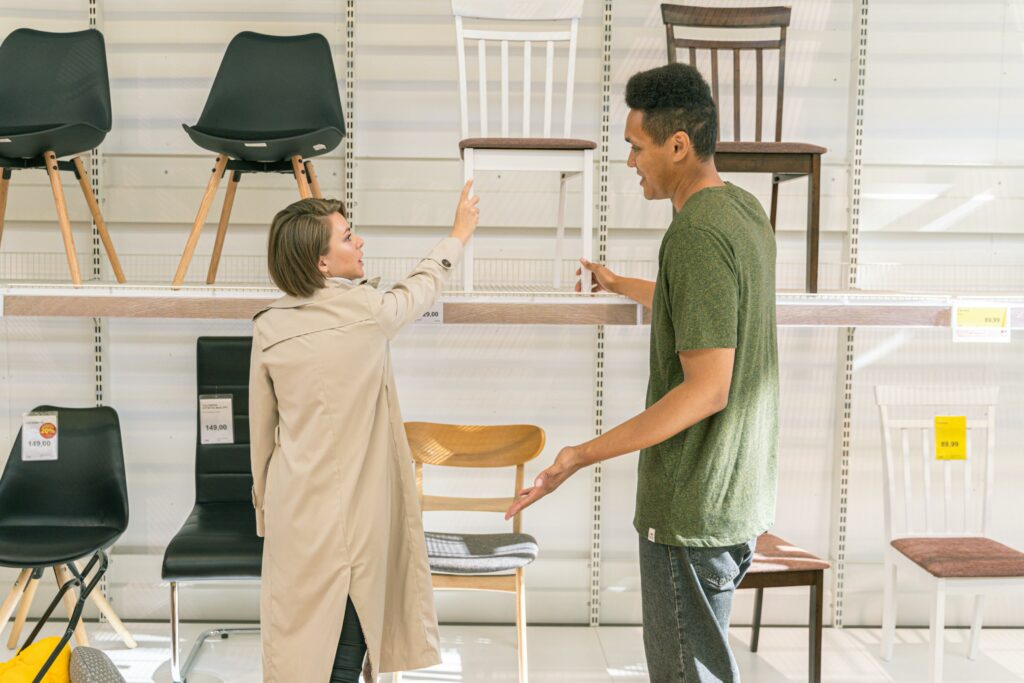
That year, I cut prices 30%.
Still no orders.
I cut more. Ran more ads. Sent more discount emails.
Still quiet.
Then I did something much simpler.
I photographed a real customer’s living room — after they received the piece. Added what they said: “The moment that table went in, the whole room changed.”
That week, orders came.
No discount.
It took me a long time to understand this.
Furniture buyers aren’t persuaded by price.
They’re persuaded by one question they’re asking themselves: “Will this actually fit in my space?”
Until they can answer that — lower prices don’t help.
Price is the last barrier.
Before that, three others have to fall quietly:
“Can I picture this in my home?” — they need photos in real rooms, real proportions. “Has anyone else bought it? Were they happy?” — they need specific proof, not generic stars. “Do I trust this store enough to hand over my money?” — they need history, policies, presence.
Once those three are settled — customers come to you asking about price. And they push back a lot less.
Conversion doesn’t come from discounts.
It comes from helping buyers see the future — before they pay for it.

Most marketing advice for furniture businesses comes from people who’ve never set foot in a showroom or touched a piece of raw wood. Mine doesn’t. I grew up in a furniture-making village outside Hanoi. Manufacturing, delivery, installation, sales — I’ve done all of it. Design is the only thing I left to someone else. For the past 7 years, I’ve run digital marketing for furniture retailers and interior design firms, watching owners burn through ad budgets on campaigns that looked great on paper and delivered nothing on the floor. HBiz exists because furniture business owners deserve straight talk from someone who understands both sides of the workbench — not another agency trying to sell them a package. When I write here, I write from that place.