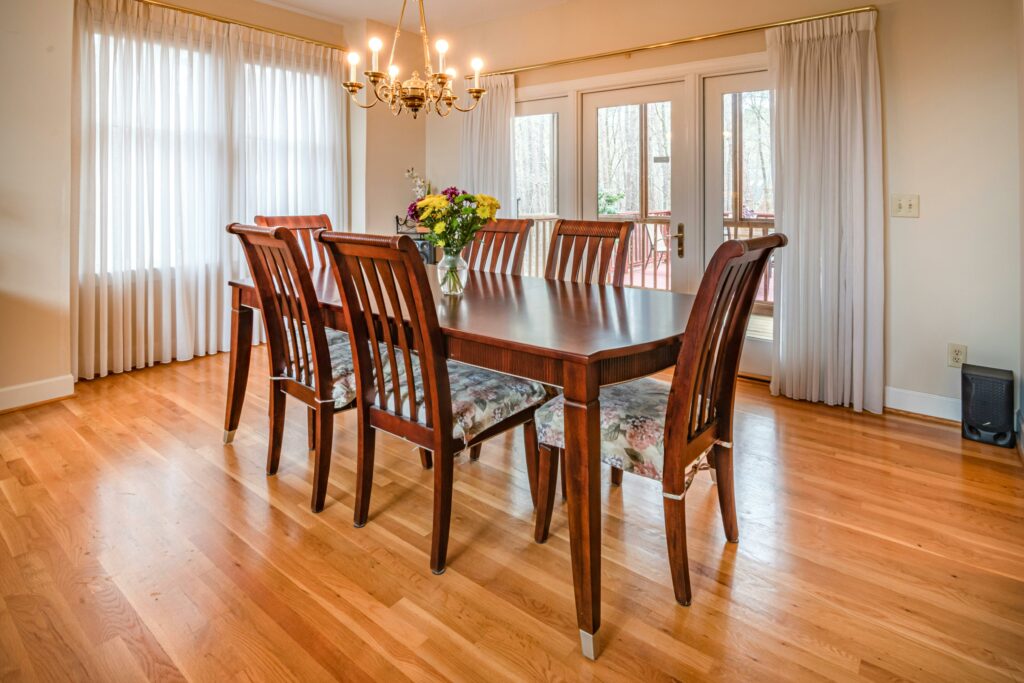

Inventory is a liability until it occupies a customer’s dining room. In the $250B+ North American furniture market, if your floor traffic isn’t converting into high-velocity cash flow, you aren’t running a business—you’re running an expensive museum.
As we enter 2026, the industry is facing a brutal reality check. The “Andersons” and “Roberts” of 2023—who bought based on simple durability or style—have been replaced by a more sophisticated, decision-fatigued buyer. Most operators are still managing their businesses based on “style trends” and “vanity foot traffic.” In a high-interest, high-competition economy, these metrics lead to stagnant capital.
The true winners of 2026 manage their showrooms like investment portfolios, focusing on Capital Allocation and Contextual Intent rather than just “selling tables.”
The Four Pillars of the 2026 Furniture Market
To master this shift, we have deconstructed the 2026 landscape into four strategic modules. Each represents a critical lever for showroom dominance:
1. The Hidden Cost of Frozen Capital (Inventory Velocity)
Most owners see a stocked floor as an asset. A CFO sees it as “Frozen Capital.” If a high-ticket dining set sits on your floor for over 180 days, it is actively bleeding your ability to reinvest in winners.
- The Museum Metaphor: Stop treating your floor as a gallery.
- Cash Velocity: Understanding the real cost of “Floor Real Estate.”
- [Deep Dive: Read the Full Analysis on Inventory Velocity]
2. Decoding the 2026 Buyer Logic (Persona Shift)
The 2026 buyer doesn’t buy furniture; they buy Context. The American dining room has evolved into a multi-use workstation and a high-end content creation backdrop.
- The Eco-Conscious Legacy Family: Investing in traceable heirlooms (American Walnut/Oak).
- The Flex-Space Professional: Demand for “Smart Minimalism” in urban hubs like Austin and Toronto.
- The Aesthetic Purist: Why “Distressed” finishes are winning in high-paced households.
- [Deep Dive: Explore the 2026 Consumer Persona Engine]
3. Why Promotion Fails Before the Product Does (The Intent Gap)
Running standard “10% OFF” Facebook Ads to a 50-mile radius is now a wealth-destruction machine. You are paying for “Scrolling Attention” when you should be investing in “Reading Intent.”
- The Trust Gap: Why standard ads are ignored by high-ticket buyers.
- Contextual Distribution: Being where the customer thinks (interior blogs/forums), not just where they scroll.
- [Deep Dive: Standard Ads vs. AI-Driven Contextual Precision]
4. Marketing as Capital Allocation (The Portfolio Mindset)
High-performing retailers treat every Ad Dollar as a unit of capital. If a specific SKU isn’t generating a qualified lead within 14 days, you don’t “wait and see”—you cut your losses and reallocate that capital to your “winners.”
- Kill Losers Fast: The discipline of cutting non-performing assets.
- Scaling Winners: The math behind doubling down on high-LTV customers.
- [Deep Dive: How to Manage Marketing as a Financial Portfolio]
Earned Wisdom: When This Logic Breaks
We choose truth over comfort. This strategic framework is not a “magic pill.” It applies specifically to High-End, High-Ticket Retail ($2,000+ per unit). It will likely fail if:
- Low Price Tiers: If your average table is under $1,500, you are in a “Price & Shipping” war where authority marketing is overkill.
- Rural Markets: In the rural Midwest, large-scale traditional sets still dominate, and “Flex-space” logic carries little weight.
- Transaction-Only Buyers: Do not waste “Authority Capital” on the “Clearance” segment. They are price-sensitive, not value-focused.
The Hbiz Self-Diagnosis for Operators
Before you spend another dollar on your 2026 marketing plan, answer these three diagnostic questions:
- Inventory Audit: Which specific dining set has been occupying floor space for over 180 days without a serious qualified inquiry?
- Fear Factor: What is the primary fear your current advertising is completely ignoring? (Is it delivery logistics, material sustainability, or post-purchase identity?)
- The Off-Switch Test: If you shut off your entire advertising budget today, which 20% of your inventory would still sell based on pure reputation and word-of-mouth?
Stop guessing which styles will move. Start managing your showroom with data-backed precision.

Most marketing advice for furniture businesses comes from people who’ve never set foot in a showroom or touched a piece of raw wood. Mine doesn’t. I grew up in a furniture-making village outside Hanoi. Manufacturing, delivery, installation, sales — I’ve done all of it. Design is the only thing I left to someone else. For the past 7 years, I’ve run digital marketing for furniture retailers and interior design firms, watching owners burn through ad budgets on campaigns that looked great on paper and delivered nothing on the floor. HBiz exists because furniture business owners deserve straight talk from someone who understands both sides of the workbench — not another agency trying to sell them a package. When I write here, I write from that place.